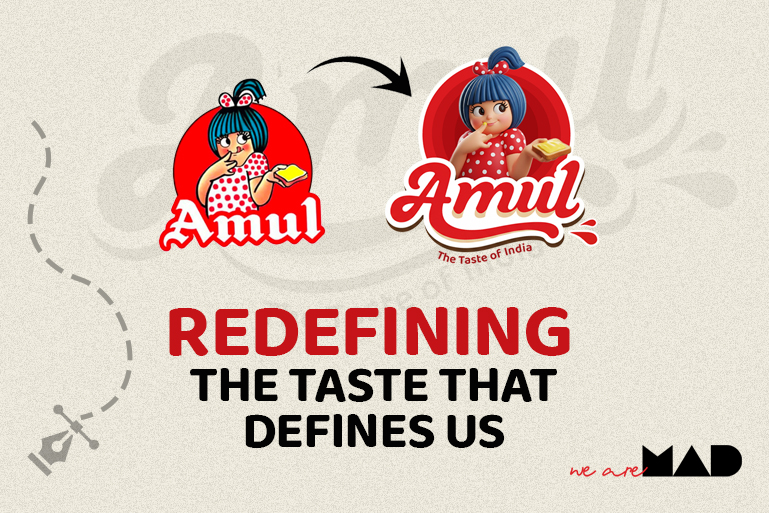
Amul Meets a Fresh Madworks Perspective on 2025
Walk into any Indian kitchen – whether in a metro apartment or a small-town home—and you will most probably find Amul there: a milk packet in the fridge, a butter box on the shelf, cheese slices in the freezer. Amul has become so routine that most households don’t even think of it as a “brand choice.” It is simply part of life.
Amul didn’t happen overnight. Long-term trust, consistency, and familiarity built way before the loud and digital era of marketing made this brand a household staple. How silently Amul turned itself into India’s default dairy name is the real story.
How Amul became a household name
Trust before Trend
Purity and consistent quality has been the brand positioning, essentially by Amul, when branding was not over the top. Reliability takes precedence over novelty in essential categories. And that trust was commanded by Amul through consistency, making everyday purchases habits.
Affordable yet Premium
The brand struck a balance that few could, feeling high quality and yet affordable across income groups. To millions, Amul represented value-good quality without financial strain. Its balance made the brand accessible and aspirational at the same time.
A Distribution Network That Reached India First
Before ‘digital reach’ became a benchmark, Amul had reached kirana stores, schools, railway stations and hostels in every part of the country. When a brand becomes easy to find, it becomes easy to choose. Familiarity turned into loyalty.
Advertising That Became Culture
Amul girl wasn’t only promoting products; she was mirroring the conversations of this country. Topical, witty, essentially dipped in everyday humour, ads struck an emotional chord with people. Instead of stars, Amul used relevance-and made it work. It felt human, approachable and very Indian.
A Brand of Community
As Amul was born from the cooperative movement, it was never looked upon as some sort of distant corporation; it symbolized farmers and their families and common growth. That authenticity created emotional ownership where people didn’t just consume the product; they believed in the story.
Why Amul Stuck?
Amul was not selling dairy alone; it was selling familiarity, memory, and identity. The same taste year after year created a habit. Humor built likability. Nostalgia created permanence. And wide availability made it the default choice. Amul didn’t dominate through aggressive marketing but through steady, reassuring presence.
Looking Ahead: What Would a 2025 Perspective Look Like?
With a new generation being raised on speed, digital platforms, and visual-first communication, the opportunity today is not to reinvent Amul but to refresh the way it speaks.
If Madworks were to reimagine Amul in 2025, the approach would be on evolution and not disruption.
A modern visual identity
Core colors and recognition would remain, but the design language would move to clean typography, bold layouts, and minimal packaging. The Amul girl would still be iconic, yet modern and digital-friendly.
A Narrative for All Generations
Instead of being carried by simple nostalgia, the storytelling would expand-from traditional meals to modern snacking, from family kitchens to college quick-bites. The idea would be simple: Amul fits every lifestyle.
Regional Voices at Scale
India is not one homogenous audience. Madworks would explore local language and culture-driven micro-campaigns that make Amul feel personal in every state, not just national in tone.
Digital-Forward Topicality
Amul pioneered topical ads. The next step would, therefore, be participatory content, creator collaborations, meme-led storytelling, and community-driven engagement moving beyond commentary into interaction.
Packaging as Media
The interactive QR codes could show recipes, behind-the-scenes stories of farmers, and even AR experiences; each pack would be more a touchpoint than just a product.
The Vision
A new creative showcase comprising modern packaging, new visuals, regional campaign posters, and digital billboards would show how evolution could happen with Amul sans losing its legacy.
Amul became the everyday brand of India through trust, consistency, humour, reach, and authenticity. The future is about not changing what made Amul iconic but framing it for a generation raised by digital culture and fast communication. The legacy remains, but the language changes. That’s where Madworks steps in.